Trentino is not only mountains and lakes. It is also a land of art, where an avant-garde movement like Futurism was born and left its mark, where artists build living sculptures inside the woods, and where castles and small village churches hold frescoes that are centuries old. In this guide we take you to discover the art of Trentino not as a list of museums, but by following the works, the artists and the places that made them famous. We at Italy Holiday have been welcoming guests in this land for a long time, and these are the art places we would recommend to a friend on their way here.
1. Arte Sella, the sculptures that live in the woods
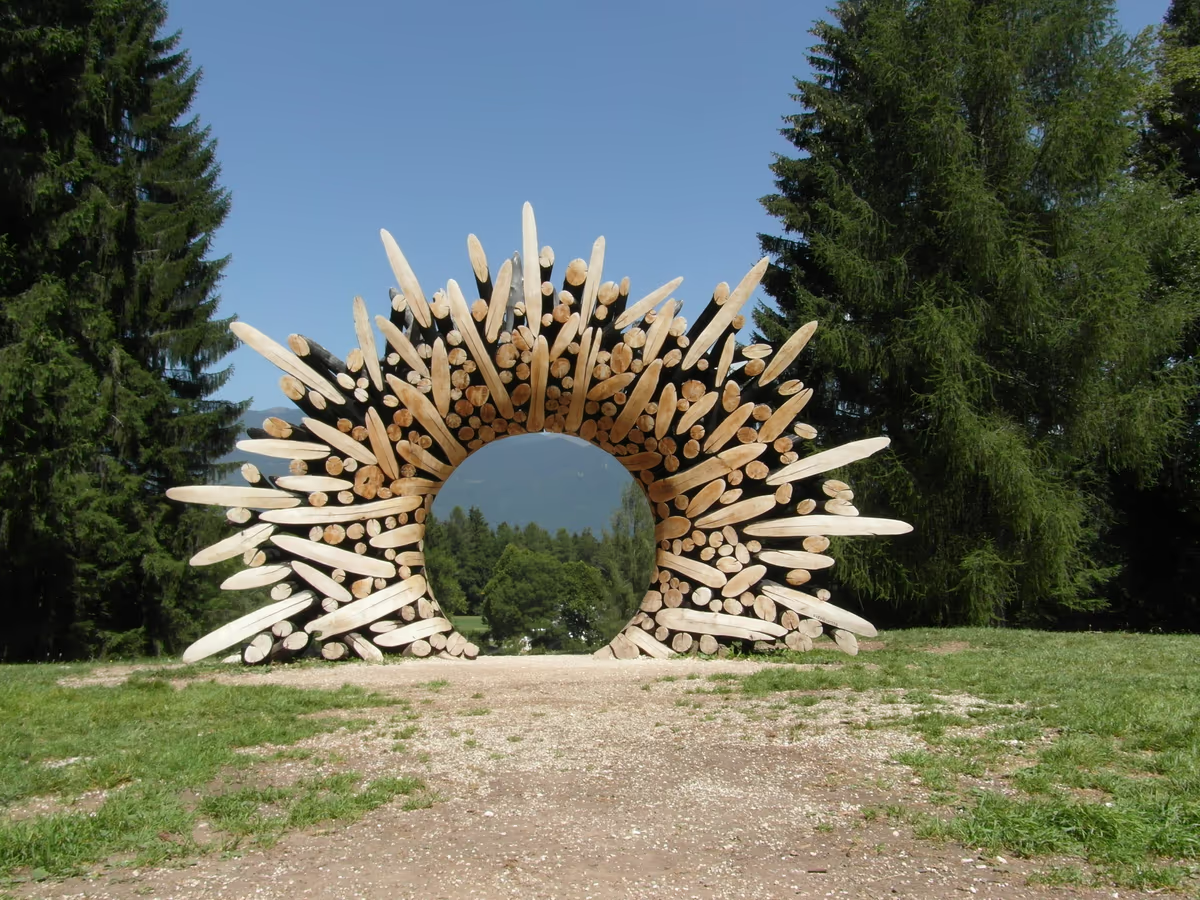
In Val di Sella, a small valley above Borgo Valsugana, art steps out of the museum and grows inside nature. Arte Sella was born in 1986 and is an open-air contemporary art exhibition: artists create their works using wood, branches, stones and leaves, and then leave them there, where time, rain and the seasons slowly transform them. It is a form of art called land art, which puts the work and the landscape on the same level. The most famous work is the Cattedrale Vegetale by Giuliano Mauri, built in 2001 with thousands of intertwined branches forming three naves and dozens of columns. Inside each column a young tree was planted, which as it grows will take the place of the branch structure that is destined to disappear over time.
You visit it by walking the ArteNatura trail, an easy walk through the woods that connects the different installations, and the Malga Costa area where the largest works are found. It is a place that changes its face with every season and every visit, because each year new works are born and the older ones transform. It lies in Valsugana, the same area as the lakes, and is one of the most surprising art experiences in Trentino. Check the up-to-date opening periods and hours on the official website before you go.
2. The MART in Rovereto and Futurism
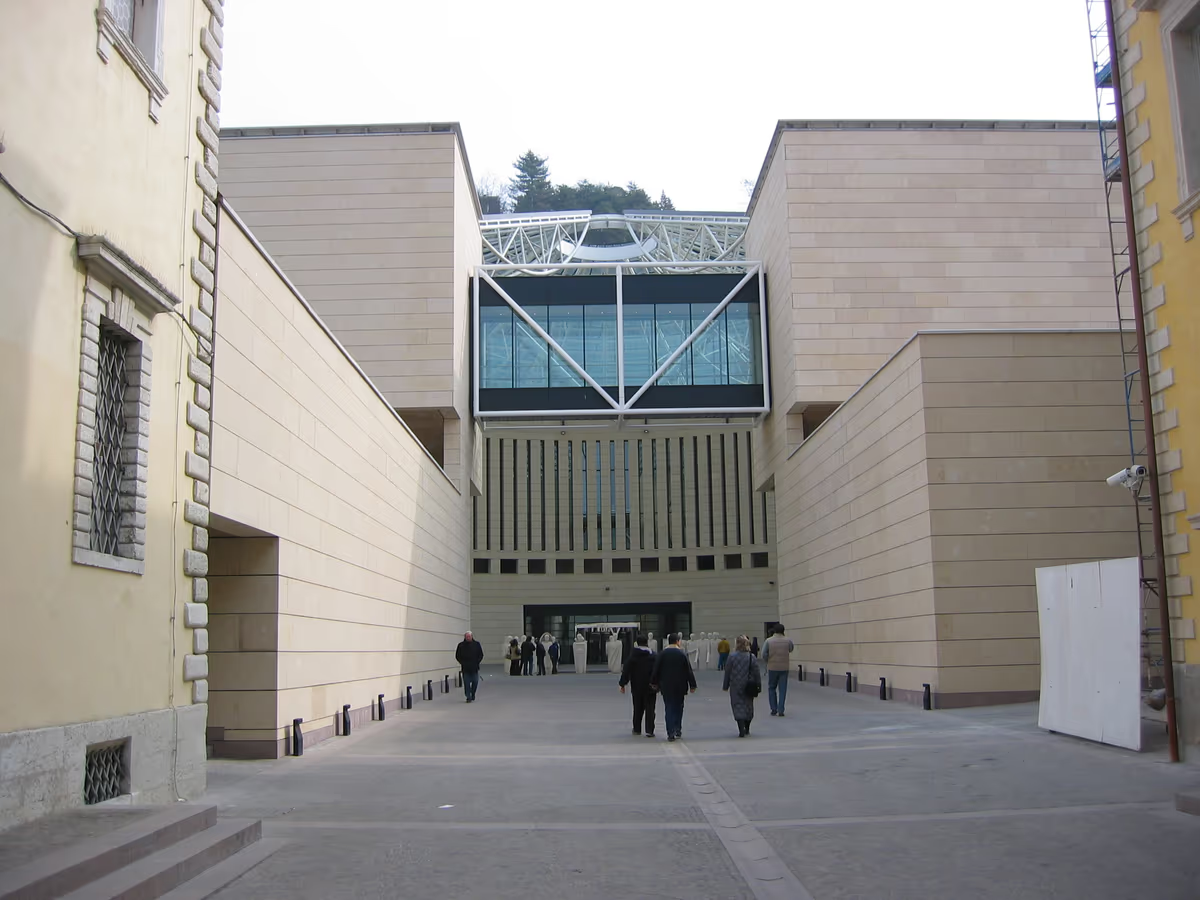
Rovereto is the capital of modern art in Trentino, and its heart is the MART, the museum of modern and contemporary art. The building itself is a work of art: a large piazza covered by a dome of glass and steel, designed by the architect Mario Botta. Inside it holds around twenty thousand works, and it is one of the most important art museums in Italy. Its collection is especially strong on Futurism and on Metaphysical art, two of the avant-garde movements that changed Italian art of the twentieth century, alongside major temporary exhibitions that change over time.
Futurism, born at the start of the twentieth century, celebrated speed, machines, cities and movement, breaking with all the painting of the past. Visiting the MART helps you understand why this borderland gave space to such new art. It is a museum designed also for those who are not experts, with clear routes and an architecture that alone is worth the visit. For hours and current exhibitions, check the official website.
3. The Casa d'arte futurista Depero
A few steps from the MART, also in Rovereto, is a place that is unique in Italy: the Casa d'arte futurista Depero, the only museum in the world founded by a Futurist artist. Fortunato Depero created it in 1957, and looked after every detail, from the mosaics to the furniture to the painted panels, because for the Futurists art had to enter into everything, with no difference between "high" art and everyday objects. Inside you find colourful fabric tapestries, toys, furniture and the advertising graphic works with which Depero was a pioneer of modern design.
Among the works stands out the famous Libro Imbullonato, published in 1927: a book closed by aluminium bolts instead of a traditional binding, considered one of the first modern artist's books and a masterpiece of Italian Futurism. Depero was born in Trentino, in the small village of Malosco in Val di Non, and this house-museum is the most direct and joyful way to enter his world. Check the up-to-date hours on the official website.
4. Torre Aquila and the Cycle of the Months in Trento
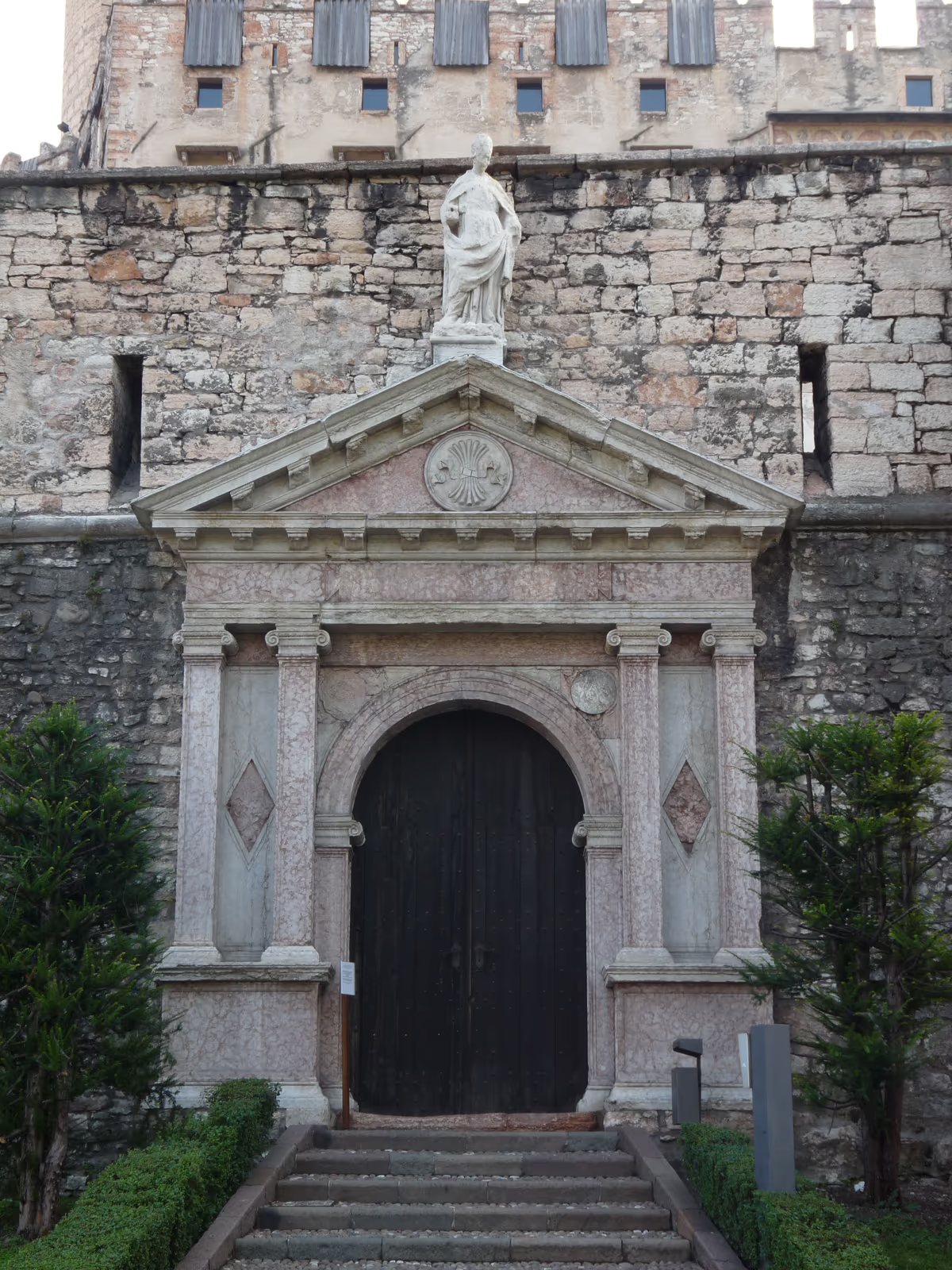
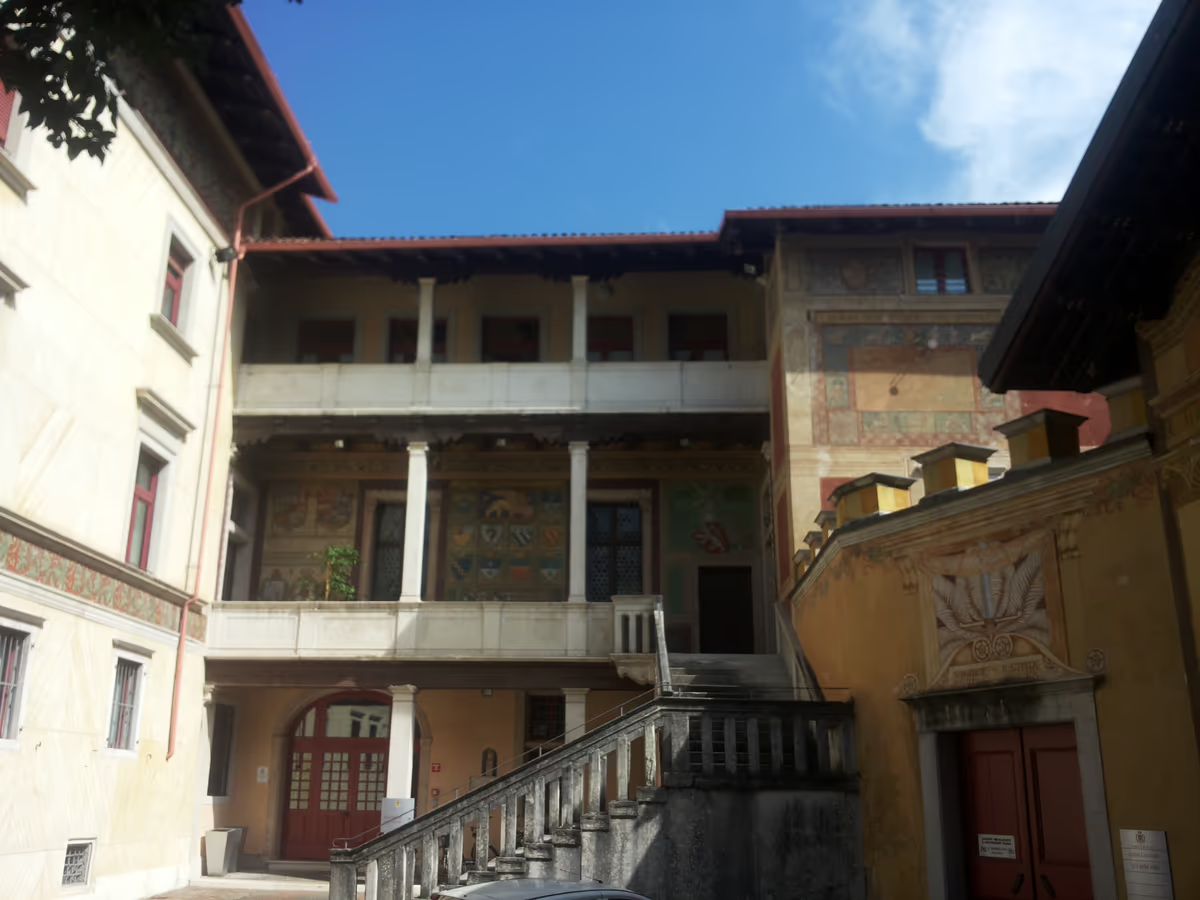
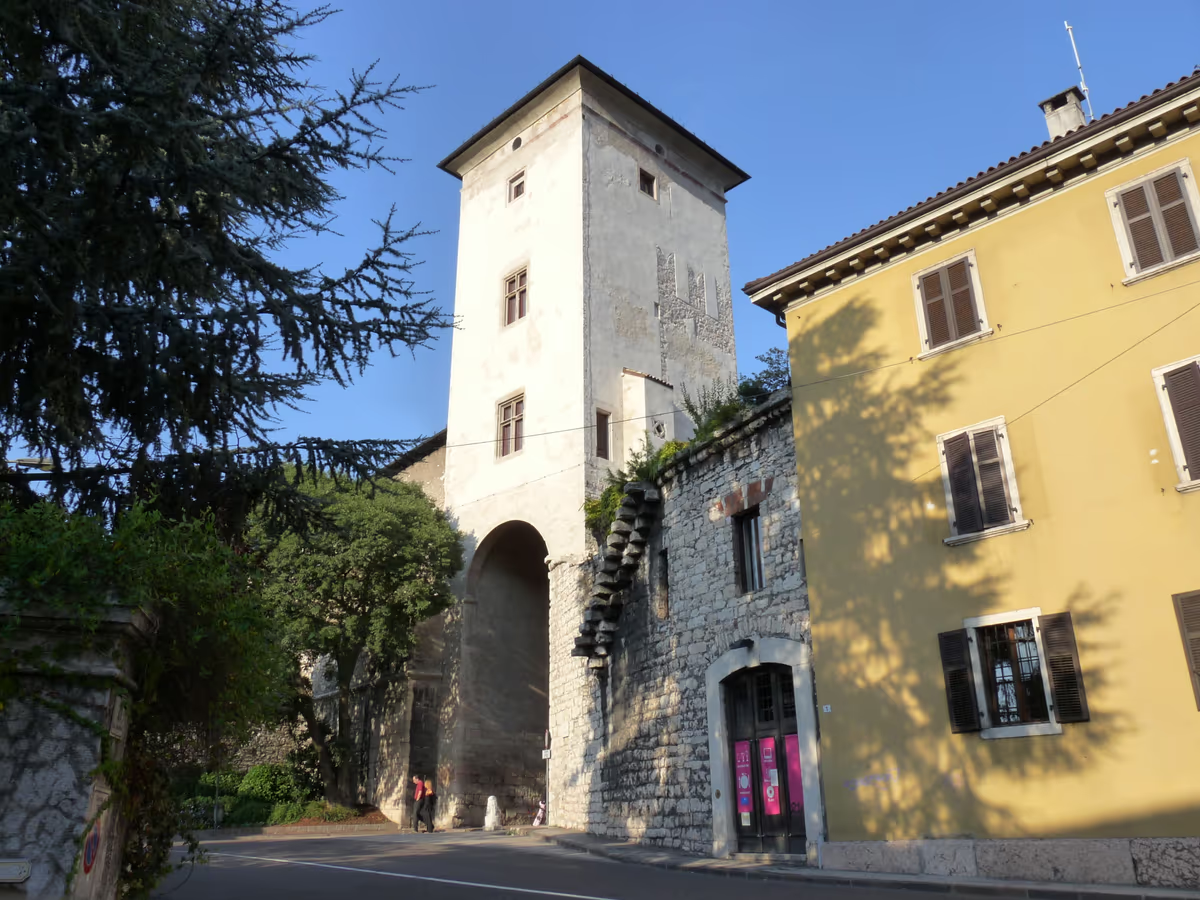
In the Castello del Buonconsiglio, the great palace that was the residence of the prince-bishops of Trento, one of the masterpieces of European Gothic art is hidden. It is Torre Aquila, a square tower at the southern end of the castle, whose walls are entirely covered by the Cycle of the Months: a series of frescoes that tell the passing of the year month by month. They are attributed to Master Wenceslas, a painter probably of Bohemian origin, active in the city from 1397, and they are considered one of the peaks of International Gothic.
What makes these frescoes so special is that they do not tell sacred stories, but everyday life: nobles hunting and at their pastimes, peasants working in the fields, snow, the grape harvest, tournaments. Today eleven of the twelve months survive, because the March scene was lost in a fire. It is a journey back in time in the heart of Trento, inside a castle that on its own deserves half a day. For up-to-date hours and tickets, consult the official website.
5. The Danza Macabra of Pinzolo
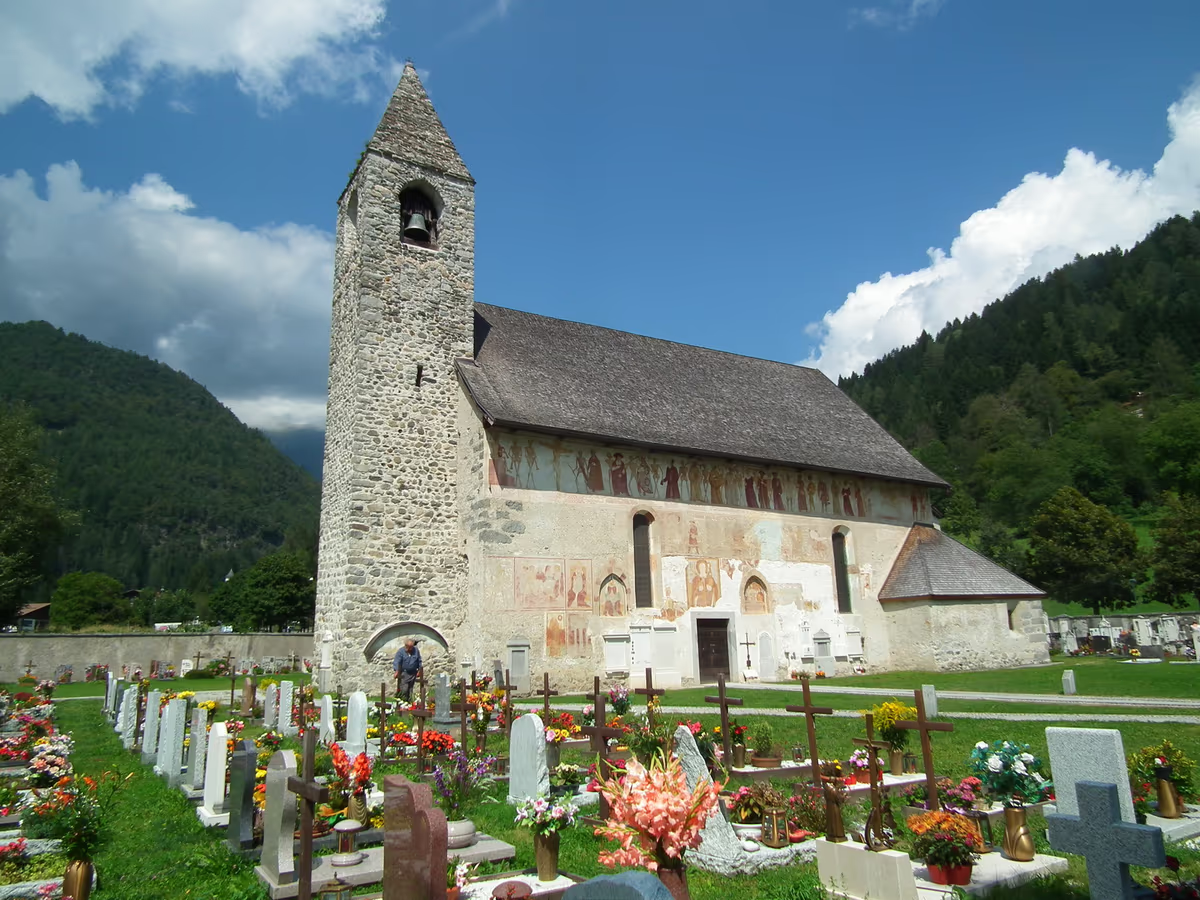
In the valleys of Trentino, art is found not only in museums and castles, but also on the outer walls of small country churches. The most striking example is the church of San Vigilio in Pinzolo, in Val Rendena. On its outer wall, along the south side, a large Danza Macabra runs for twenty-one metres, frescoed in 1539 by Simone Baschenis, a painter from a family of Lombard artists. It is one of the best-known medieval works of the Alpine arc.
The fresco shows a long procession: skeletons that drag people of every condition into the dance, from the pope to the king to the beggar, accompanied by captions in dialect. The message is that of memento mori, "remember you must die": before death everyone is equal, rich and poor, powerful and humble. It is a work that still strikes today for its direct force, painted in the open so that anyone passing by could read it. Pinzolo lies in Val Rendena, near Madonna di Campiglio.
6. The frescoes of Castello di Avio
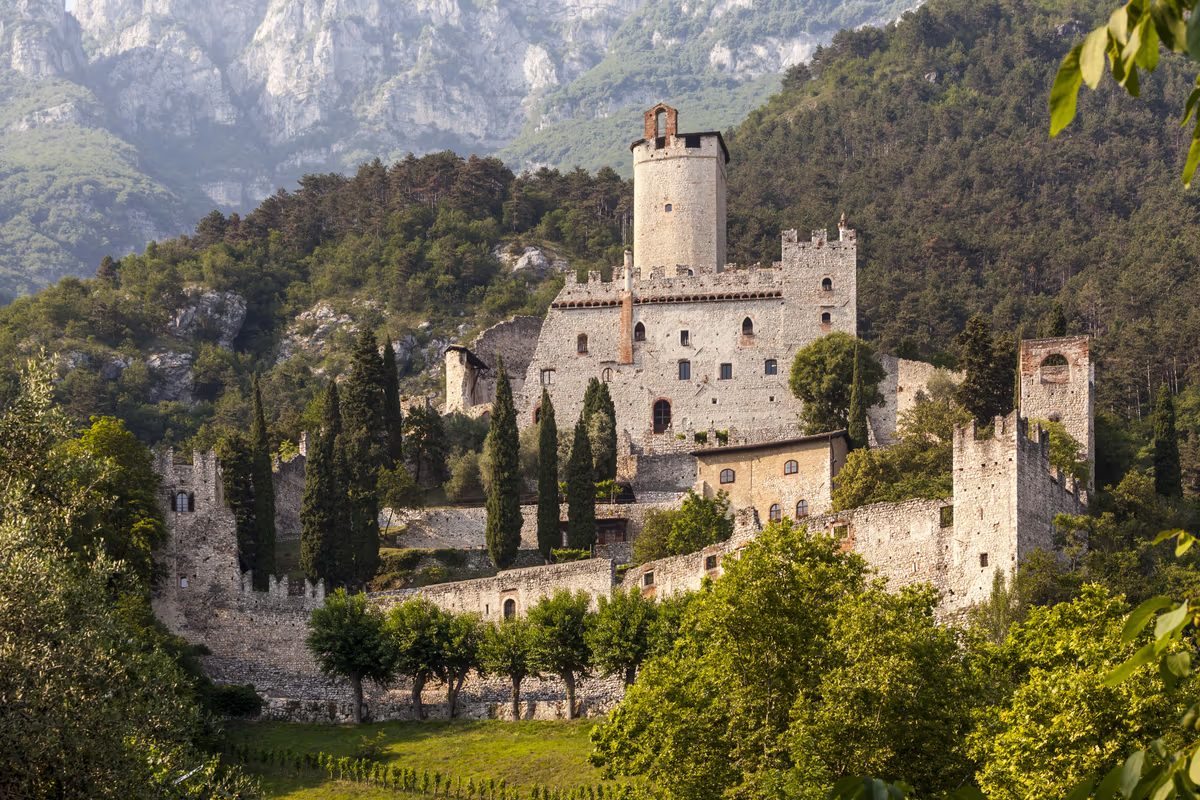
Heading south, in Vallagarina, Castello di Avio dominates the Adige valley among the vineyards. It is one of the oldest medieval fortresses in Trentino, today cared for by the FAI, the Italian National Trust, which received it as a gift in 1977 and restored it. What makes it special is not only the walls and towers, but some of the most beautiful medieval frescoes in the region, kept in two different rooms of the castle.
In the keep is the famous Camera dell'Amore (Chamber of Love), a refined fourteenth-century cycle where arrows pierce the hearts of an elegant lady and a knight, and Love rides an impetuous horse. In the Casa delle Guardie (Guards' House), painted by another hand a few decades later, the walls show instead battle scenes and the arts of war. Together they tell the two great themes of the world of chivalry, love and war, with a liveliness rare for medieval painting. From the top you enjoy a magnificent view over the Vallagarina. Check opening days and hours on the official website.
7. The frescoed houses of Trento
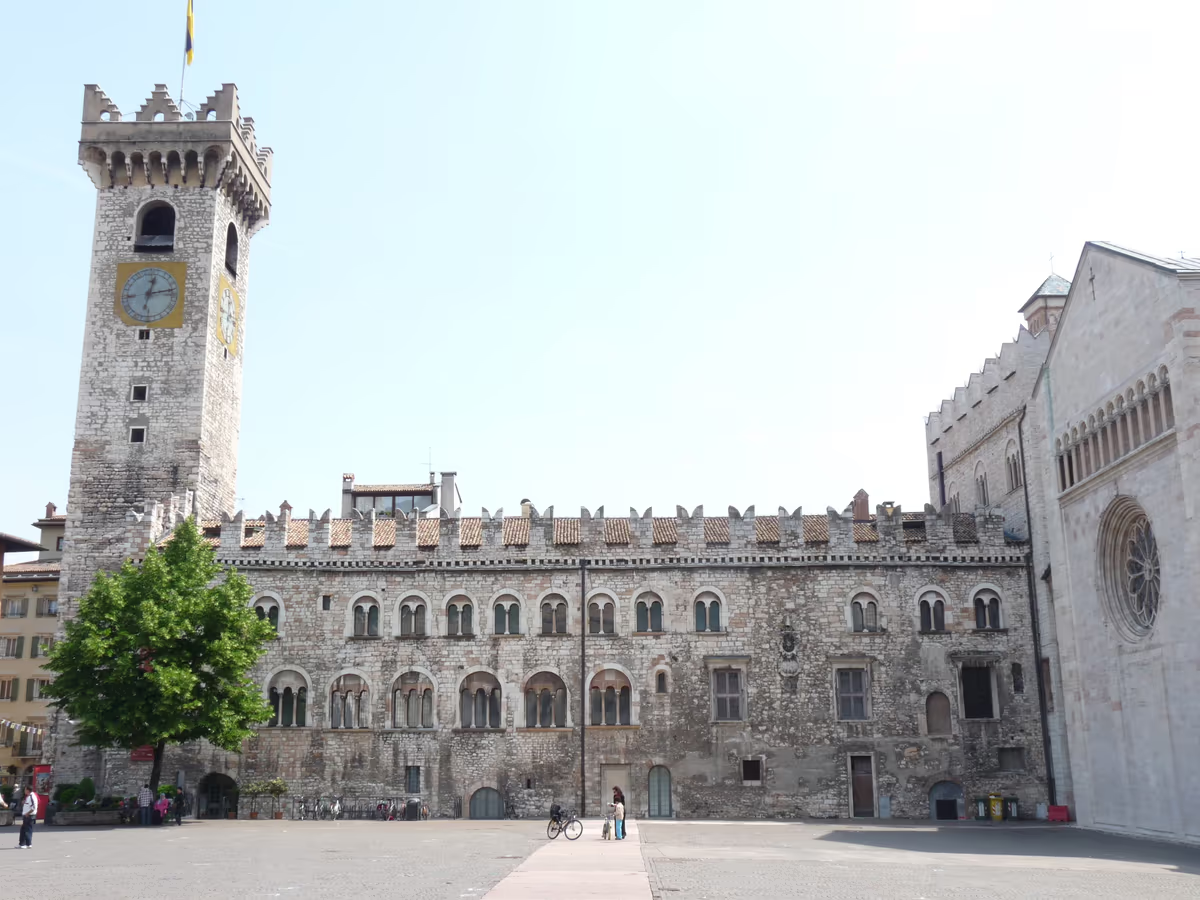
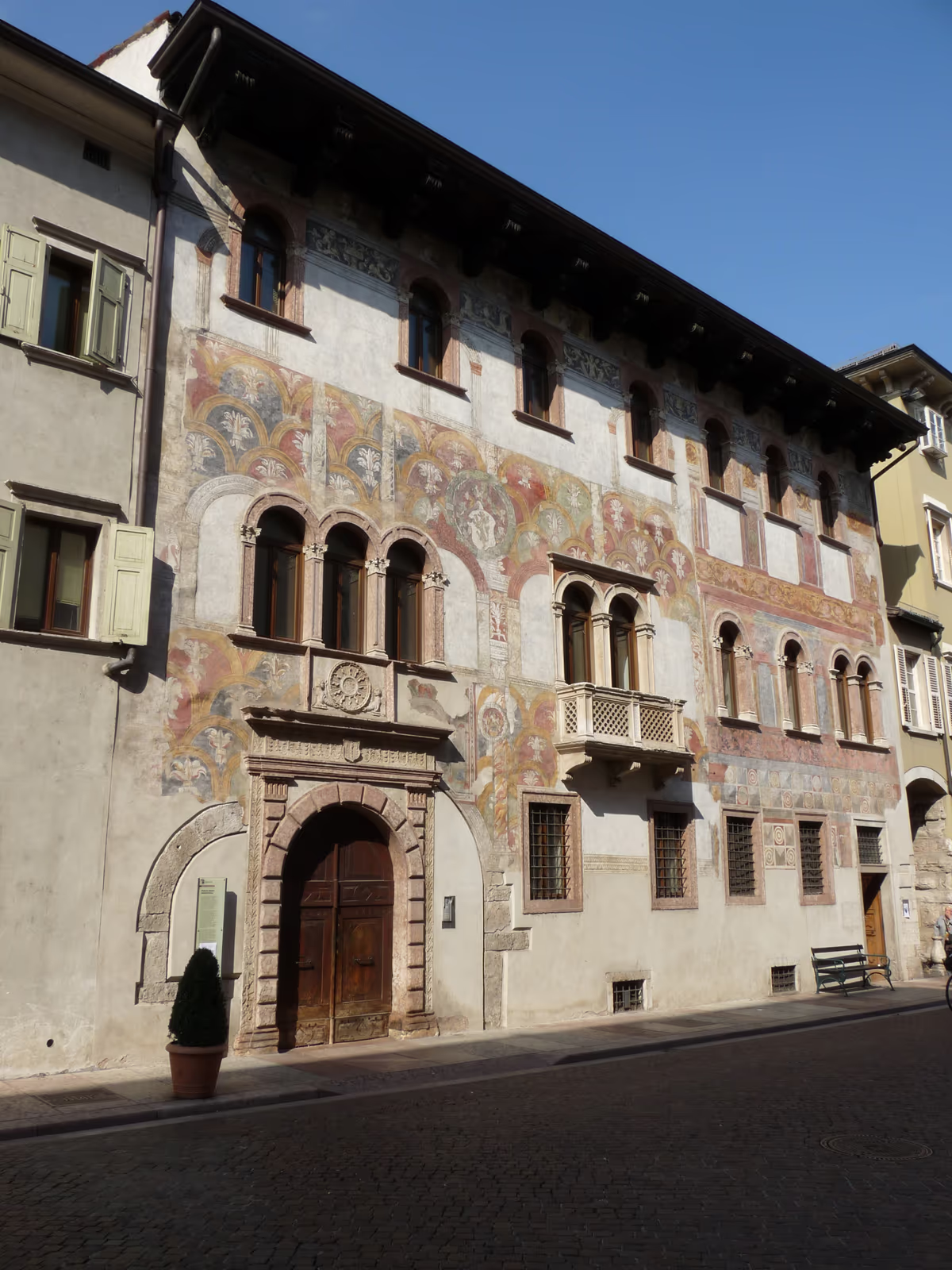
The last stop is a form of art that in Trento you meet simply by walking: the painted facades. In the old town, along the elegant Via Belenzani, several Renaissance palaces have their outer walls covered with frescoes, and for this reason Trento is also called the painted city. The most poetic example is Palazzo Quetta Alberti-Colico, where the sixteenth-century frescoes overlap with the older fifteenth-century ones, with floral motifs, friezes and painted heads that recall the colours of Venetian painting.
The facade decorations are attributed to Marcello Fogolino, one of the most active painters in Trento in the sixteenth century. Walking along Via Belenzani and the nearby Piazza Duomo you discover other painted facades, such as those of the Cazuffi-Rella houses facing the square. It is an open-air, free museum, to be enjoyed simply by looking up as you cross the city.
Where to stay for a journey through the art of Trentino
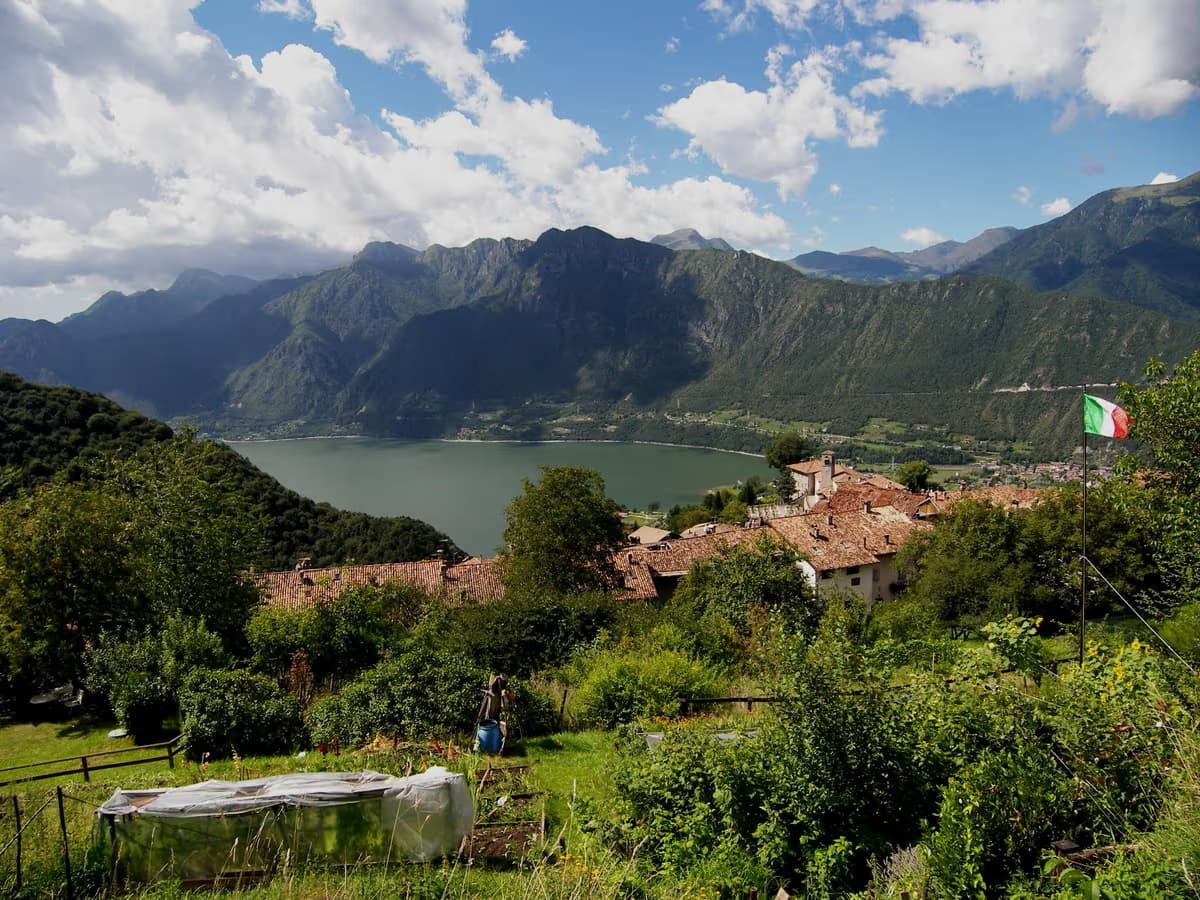
The art of Trentino is concentrated in a few areas that are easy to reach, and all three are close to where we welcome our guests. Rovereto is the ideal base for Futurism, with the MART and the Casa d'arte futurista Depero a few steps from each other. Trento, about twenty minutes away, offers Torre Aquila at the Castello del Buonconsiglio and the painted houses of the old town. And Valsugana, the valley of the lakes, is the starting point for Arte Sella and its sculptures in the woods.
For this reason a holiday between Rovereto, Trento and Valsugana lets you experience the art of Trentino without long journeys: one day among Futurism and museums, one day among frescoes and castles, one day among the works of art hidden in the woods. In the morning you wake up a few minutes from a masterpiece, and in the evening you return to a home designed to make you feel at ease.
We at Italy Holiday welcome guests right in these areas, in homes that are cared for and welcoming from the very first moment. If you dream of a journey through art, history and landscapes, discover where to stay near Rovereto, Trento and Valsugana and set off to discover the art of Trentino. Italy Holiday is the partner for your stay: you think about the art, we take care of the rest.