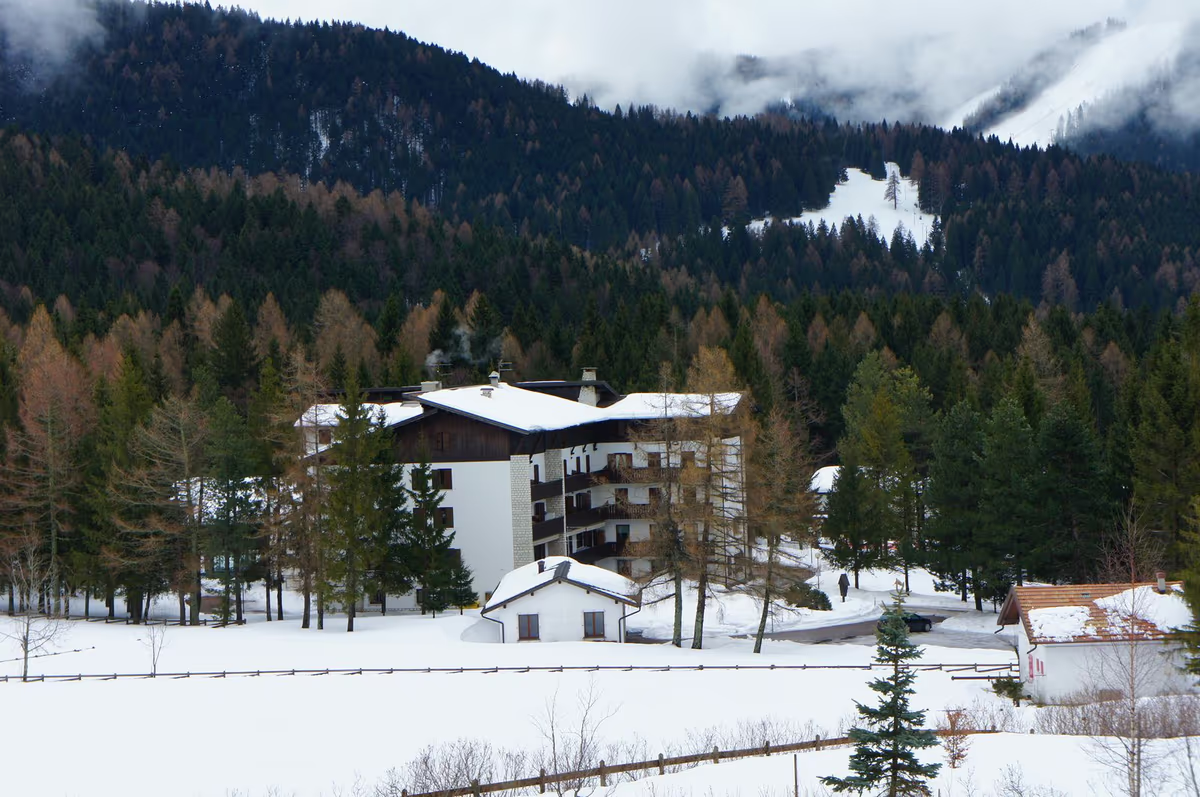
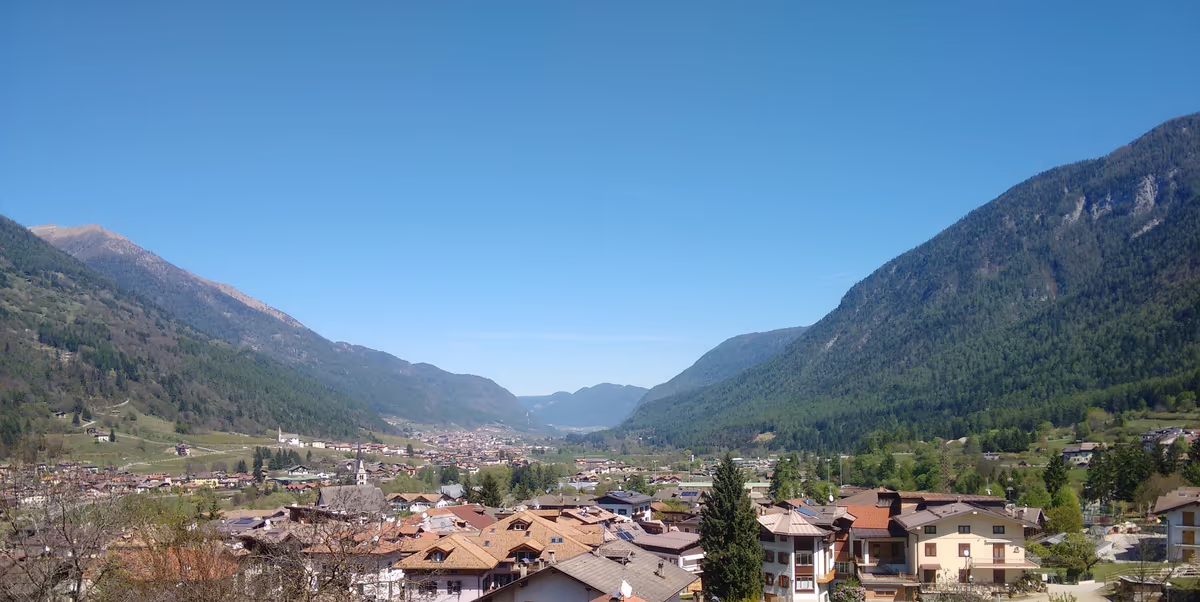
For four years, between 1915 and 1918, the mountains of Trentino were the border between two empires and the stage of a war fought among the rocks, the snow and the woods. Today these places have returned to silence, but the stone of the forts, the trenches dug by hand and the trails along the old front lines still tell that story. A long route, the Sentiero della Pace, the Path of Peace, crosses Trentino following the old front line and connects them all, from the Stelvio to the Marmolada. In this guide we take you among the forts and trails of the Great War in Trentino, with respect for the memory of those who lived and fell up here. We at Italy Holiday have been welcoming guests to this land for a long time, and these are the places we would recommend to anyone who wants to understand up close what happened among these mountains.
1. Forte Belvedere, the Austro-Hungarian fort at Lavarone
On the Alpe Cimbra, above Lavarone, Forte Belvedere stands on a rocky outcrop at just under 1,200 metres, overlooking the Astico Valley, which at the time marked the border between the Kingdom of Italy and the Austro-Hungarian Empire. It was built by the Austro-Hungarian army between 1908 and 1912, one of seven forts that defended the highlands of Trentino. It is the only one to remain intact: many of the others were dismantled in the 1930s to recover their iron, while this one still keeps its armoured cupolas and its structure.
Today the fort houses a museum dedicated to the First World War, spread over three floors of the main barracks, with relics, photographs and multimedia displays in several languages. It is a place that helps you understand up close what mountain warfare was, from life inside the fort to the conditions of the soldiers at the front. It is reached by car from Lavarone, about an hour south of Trento climbing onto the plateau. Check the current opening times on the official website, as they change with the seasons.
2. Forte di Cadine, the stone barrier guarding Trento
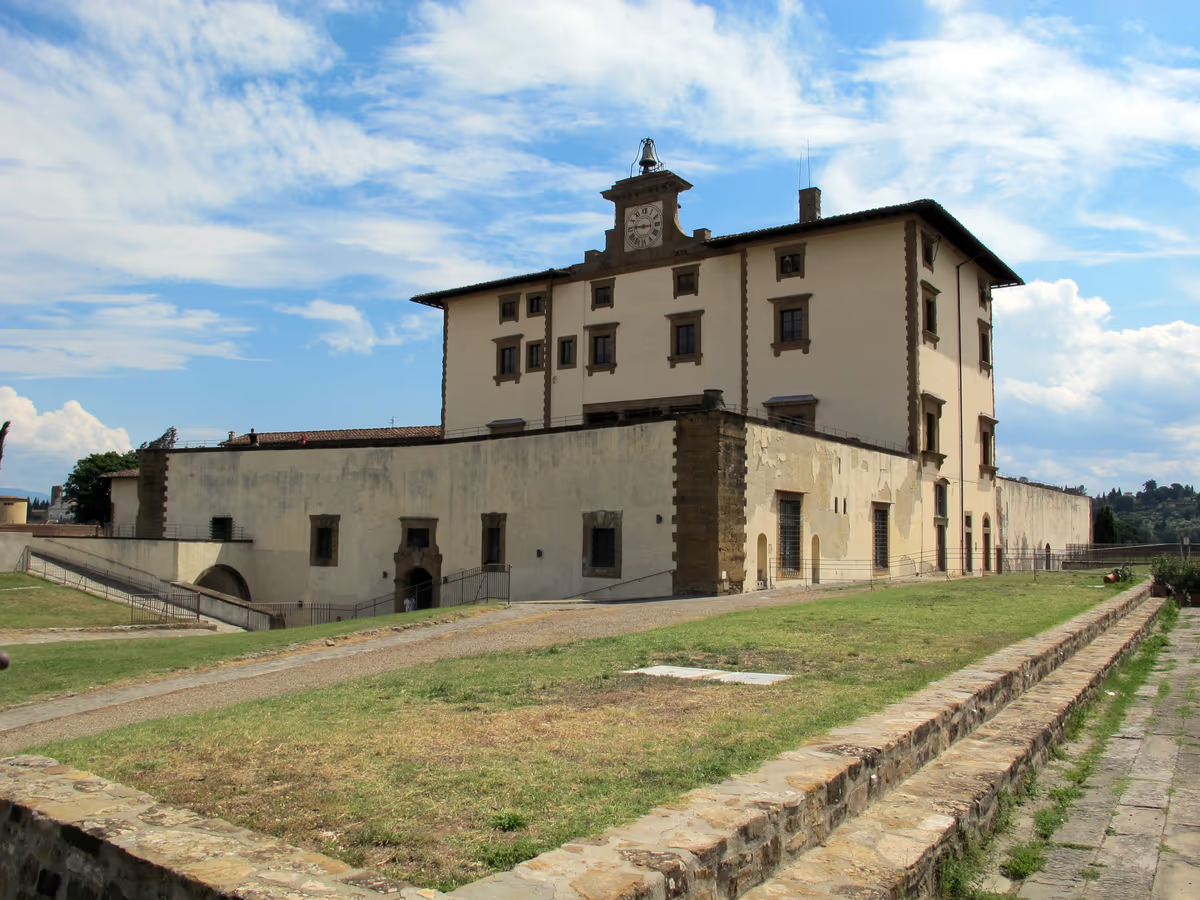
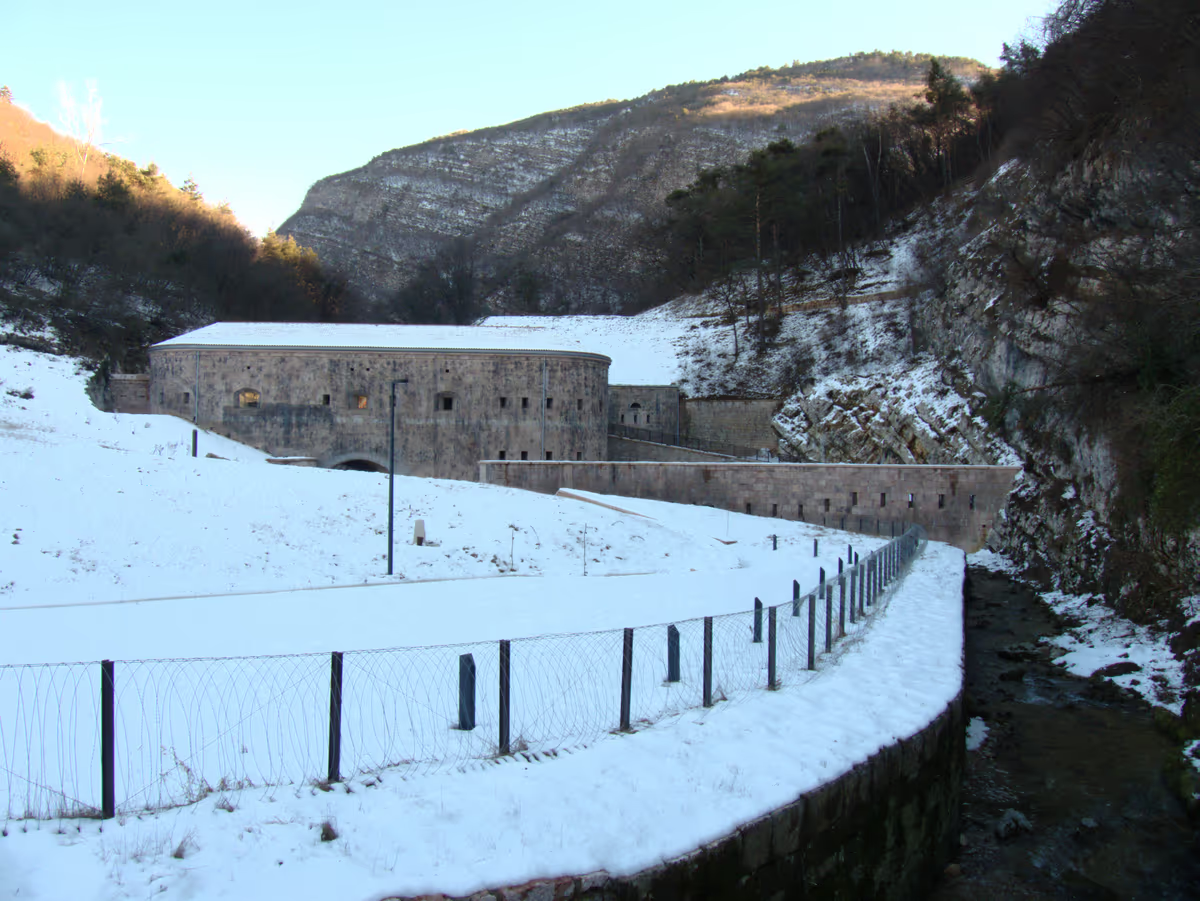
A little to the west of Trento, where the narrow gorge of the Bus de Vela closes the access to the city, stands the Forte di Cadine. It was built by the Austrian army between 1860 and 1862, in blocks of pink limestone resting on the rock of the gorge, with casemates for the artillery and galleries for the riflemen. Its peculiarity is that it was not a simple gate to close: the whole construction, shaped like a bridge, barred the passage. It is one of the first permanent Austrian forts guarding Trento and the Adige Valley.
Carefully restored by the Province of Trento, today it houses a multimedia exhibition on the Great War and has become once again a place of memory and dialogue. In 2018 it received the European Heritage Label, an award given to places that embody the shared values and history of Europe. It is easily reached from Trento, along the road that climbs towards the Valle dei Laghi. Check the opening times before your visit.
3. Passo Nota, the trenches between the Ledro Valley and Lake Garda
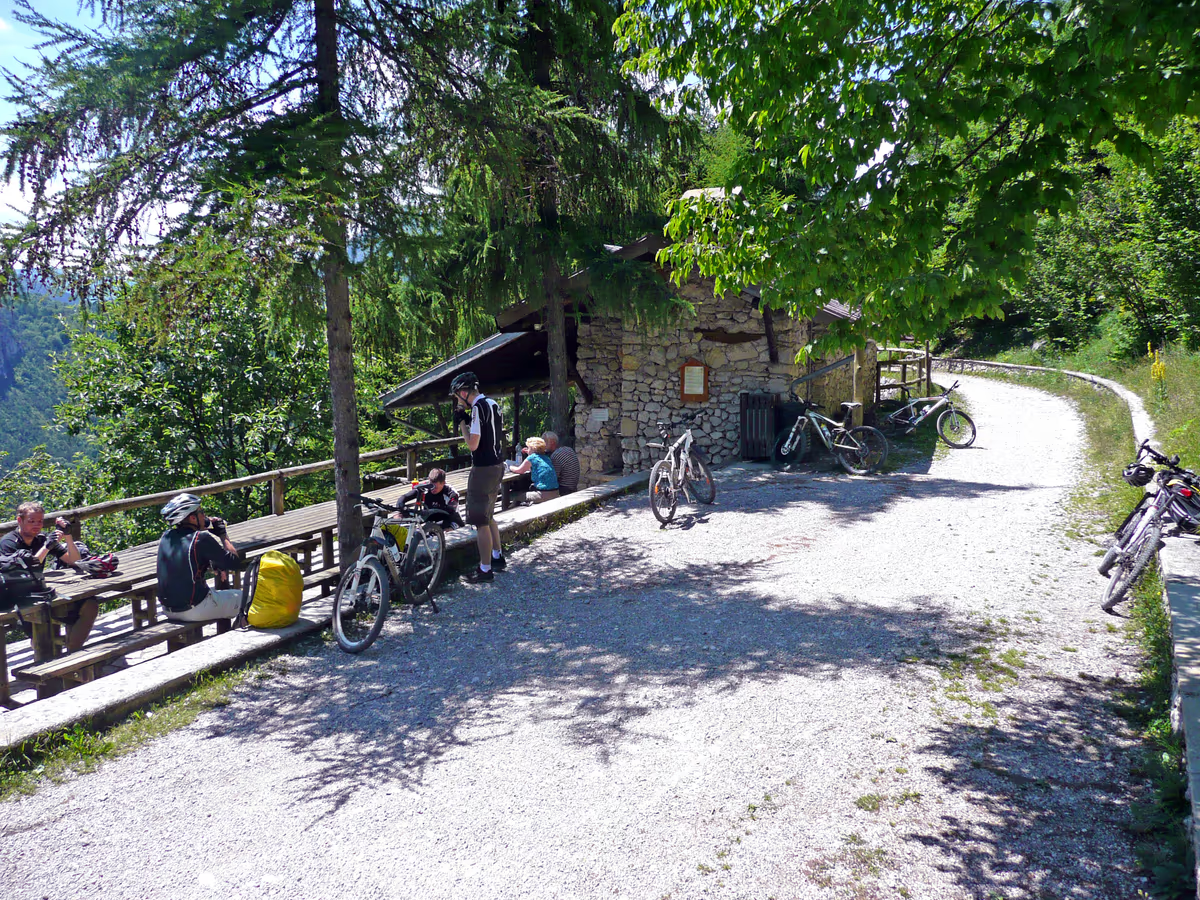
Between the Ledro Valley and the Alto Garda, Passo Nota is a mountain pass that since ancient times connected the valley to the lake. During the Great War, between 1915 and 1918, it was one of the most important points of the first Italian line of defence. Around the pass you can still find trenches, a famous concrete trench, the remains of a sub-sector command, barracks and infirmaries carved into the mountain along the old defensive front of the Alto Garda.
Today it is a place where history blends with a landscape of great beauty, among the Casarino and Nota woods that in autumn glow with golden colours. It is a destination for those who love to walk and to read on the ground the signs of the war, far from the crowds. It is reached by mountain roads from the Ledro Valley or from the shore of Lake Garda. Bring suitable shoes and respect the remains you come across along the way.
4. Passo Paradiso, the White War on the Adamello
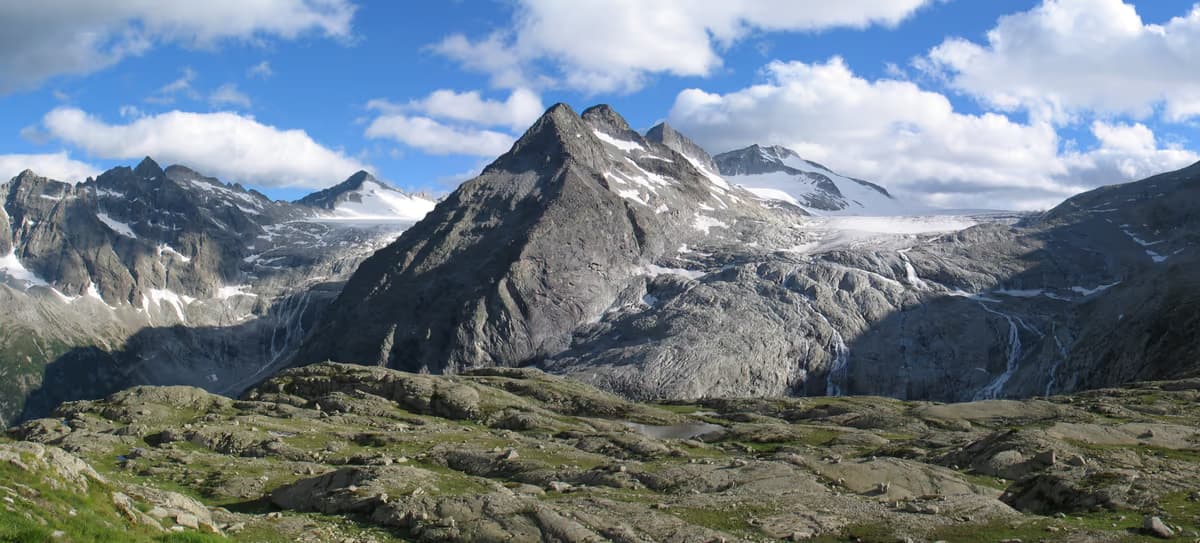
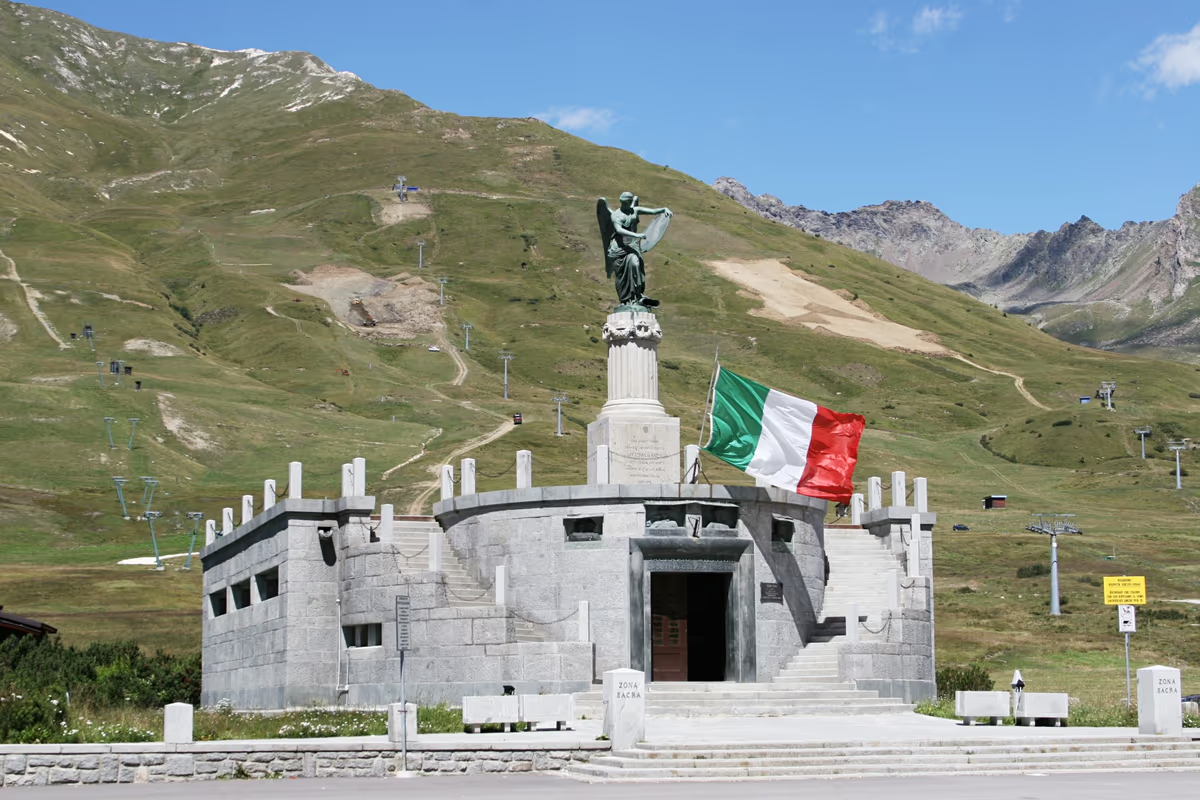
At over 2,500 metres, above the Passo del Tonale, the Passo Paradiso is a panoramic terrace overlooking the Presena Glacier and the Adamello group. Here, in 1915, the border between Italy and Austria-Hungary ran along the ridges around the Presena basin, and this area was one of the theatres of the White War, the war fought at high altitude among ice, snow and cold. The soldiers dug caverns and trenches into the rock and the ice, in extremely harsh conditions.
Among the snow there still remain caverns, barbed wire and the signs of those battles, and in the area of the pass there is an exhibition dedicated to the White War, to understand what it meant to fight at these altitudes. It is a place where history blends with a grand alpine landscape. It is reached from the Passo del Tonale by the cable car that climbs to the Passo Paradiso. It is a high-mountain destination: go in summer, with stable weather and suitable gear.
5. Museo Storico Italiano della Guerra, inside the castle of Rovereto
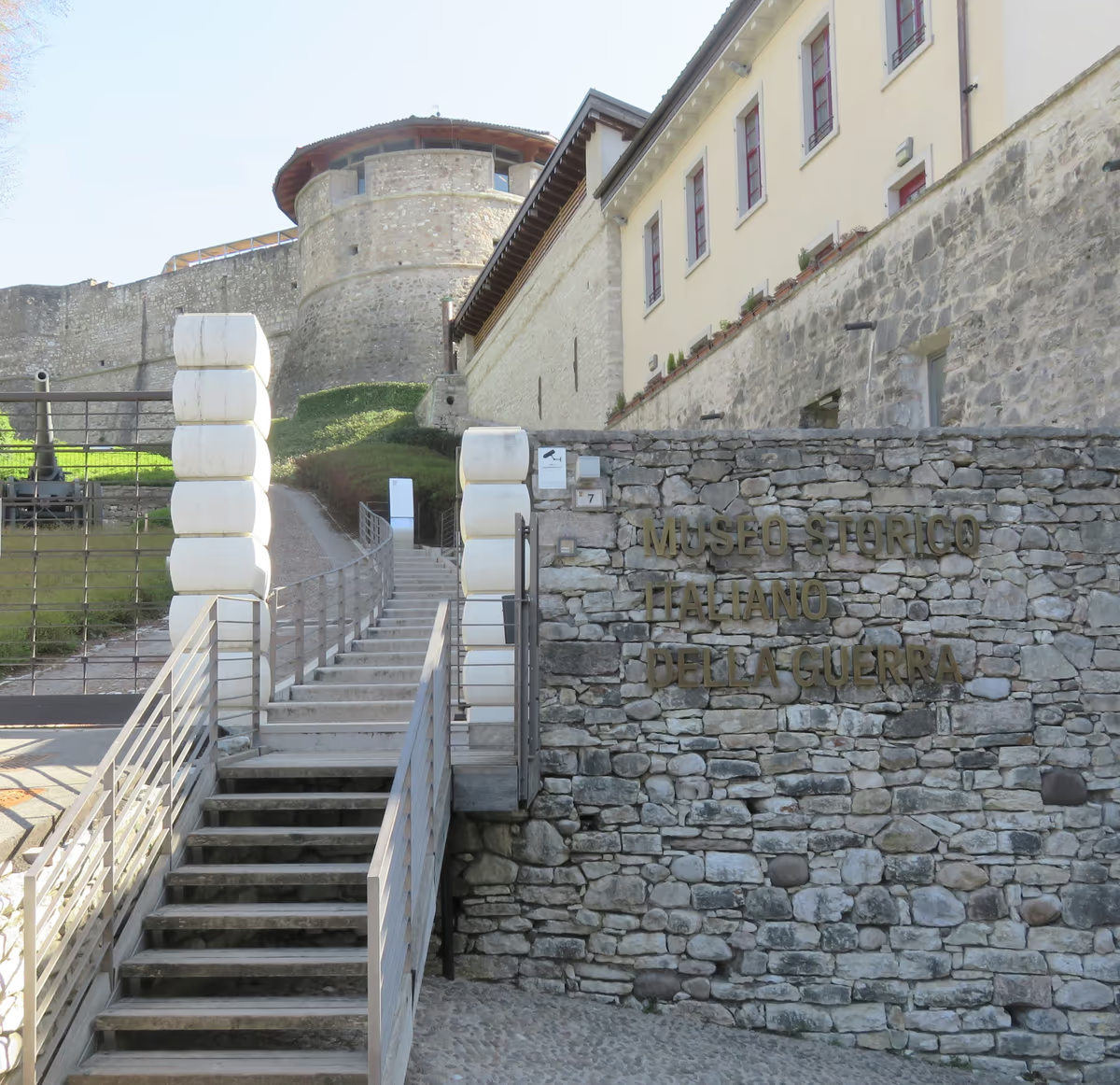
In the heart of Rovereto, inside the medieval castle of the city, stands the Museo Storico Italiano della Guerra, the Italian War History Museum, inaugurated in 1921. It was founded to preserve the memory of the Great War in one of the cities that had suffered the most from it, and today it holds one of the richest collections in Italy on this conflict. It tells the story of the First World War through uniforms, weapons, photographs and documents, up to a real biplane and the artillery pieces kept in the tunnels carved at the base of the castle.
The visit combines one of the best preserved castles in Trentino with a deep and moving historical journey, with a wide view over Rovereto and the Vallagarina valley from the towers of the fortress. It is right in the centre, a few minutes on foot from the train station. It is a perfect starting point for understanding the history of the whole Trentino front. Check the opening days and times before your visit.
6. Campana dei Caduti, Maria Dolens on the Colle di Miravalle
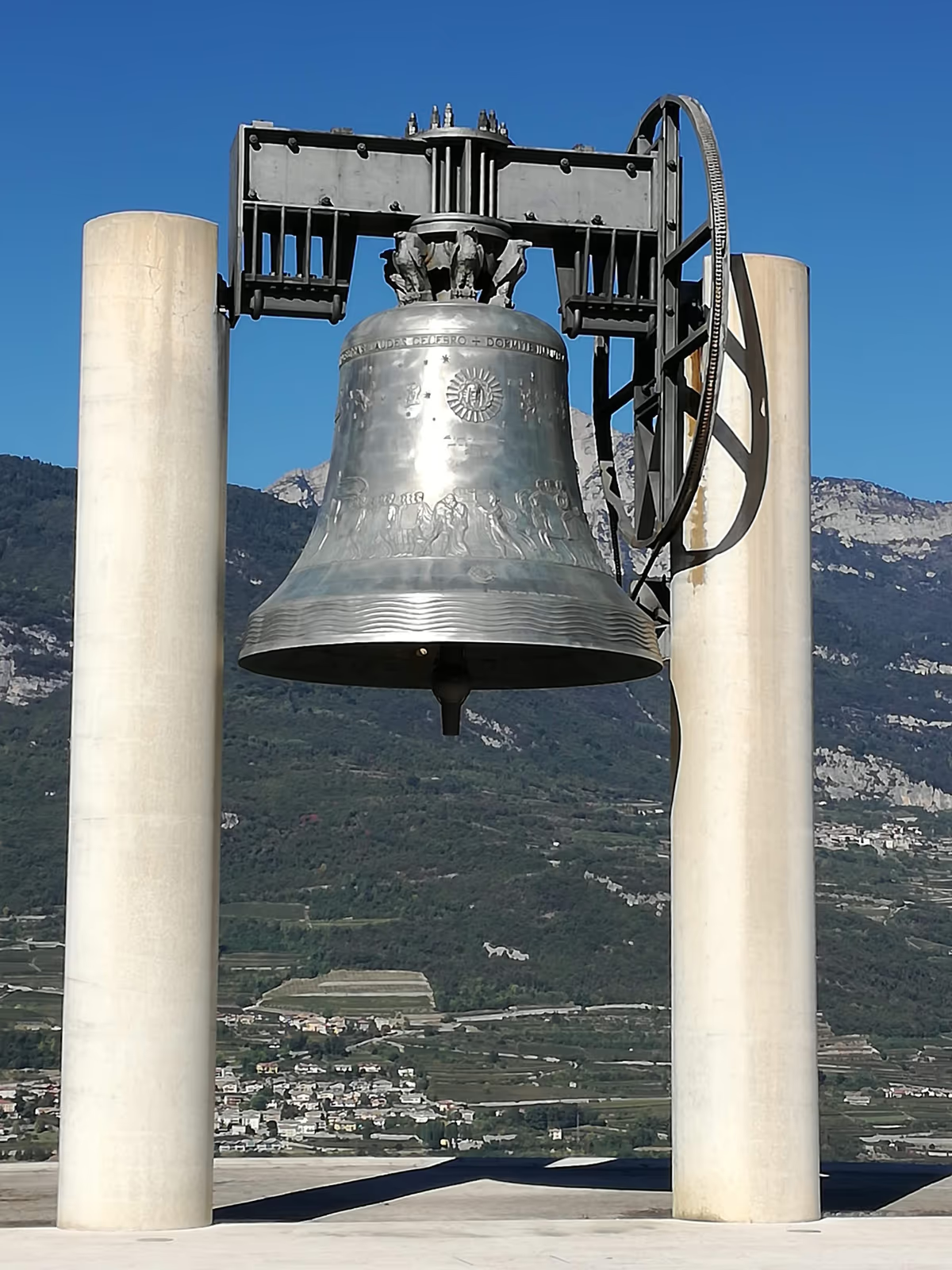
Above Rovereto, on the Colle di Miravalle, stands one of the best known symbols of peace in Italy: the Campana dei Caduti, the Bell of the Fallen, called Maria Dolens. It is one of the largest swinging bells in the world, cast from the bronze of the cannons of the First World War and dedicated to the fallen of all wars, with no distinction of country or faith. Beside the bell, a small exhibition of photos and videos tells its story.
Every evening the bell sounds one hundred strokes to remember the fallen and to call for peace and brotherhood among peoples. Listening to it at sunset, with the valley opening below the hill, is a moment that stays with you. It is the right place to end a journey among the forts and the trenches: after seeing where the fighting happened, here you return to thinking about peace. It is reached in a few minutes by car from the centre of Rovereto.
Where to stay for a journey into the history of Trentino
If you look at the map of these places, you notice one thing: they are all reachable in a day from a base in the heart of Trentino. The Alpe Cimbra, with Forte Belvedere at Lavarone, and the Altopiano della Vigolana stay close, set among the woods above the valley. Trento, with Forte di Cadine at its gates, is central for everything. Going south down the Adige Valley you reach Rovereto, with the War Museum and the Bell of the Fallen a few minutes from each other. Passo Nota, towards Lake Garda, and Passo Paradiso, on the Adamello, remain fine day trips for those who want to go further.
This is why the area of the Valsugana lakes, around Caldonazzo, Levico, Calceranica and Pergine, together with Trento, the Altopiano della Vigolana and the Alpe Cimbra, is an ideal base for a journey into history. In the morning you set off towards the forts and the trails, you spend the day among stone, memory and views, and in the evening you return a few minutes from the lake and the mountains. Rovereto too, further south, is an excellent base for those who want the Vallagarina front within easy reach.
We at Italy Holiday welcome guests in this very area, in homes designed to make you feel at home from the very first moment. If you want a journey through history, mountains and memory, discover where to stay near the forts and trails of the Great War and pack your bags: the Trentino of history is waiting for you.
Digital partner for holiday-home owners since 2022.